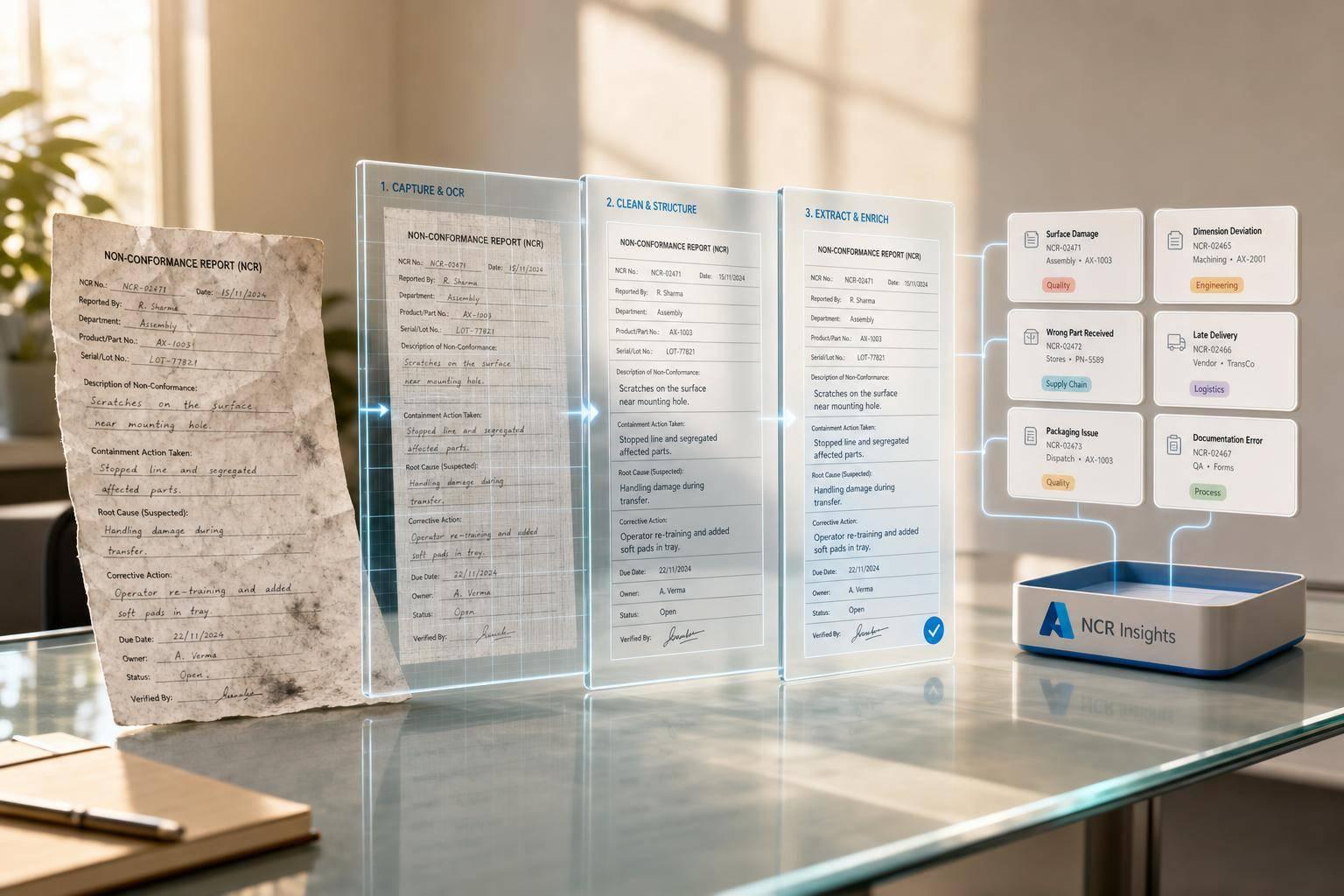
Azure AI for NCR text and defect pattern detection
Turn messy scanned NCRs into searchable, routed, and semantically grouped defect signals with Azure AI; if intake data is cleaned first.
Tag
Articles tagged “Data Governance” on Ryshe.
Turn messy scanned NCRs into searchable, routed, and semantically grouped defect signals with Azure AI; if intake data is cleaned first.

Build Part 11/Annex 11‑compliant AI audit trails on Azure: log identity, model version, input/output hashes, immutable storage, retention and review.

Use real-time only when freshness changes decisions; otherwise prefer batch or a hybrid to cut cost, complexity, and audit risk.

Implement Azure predictive maintenance: start small, fix data quality, route alerts into ERP/MES, and measure downtime and scrap reductions.
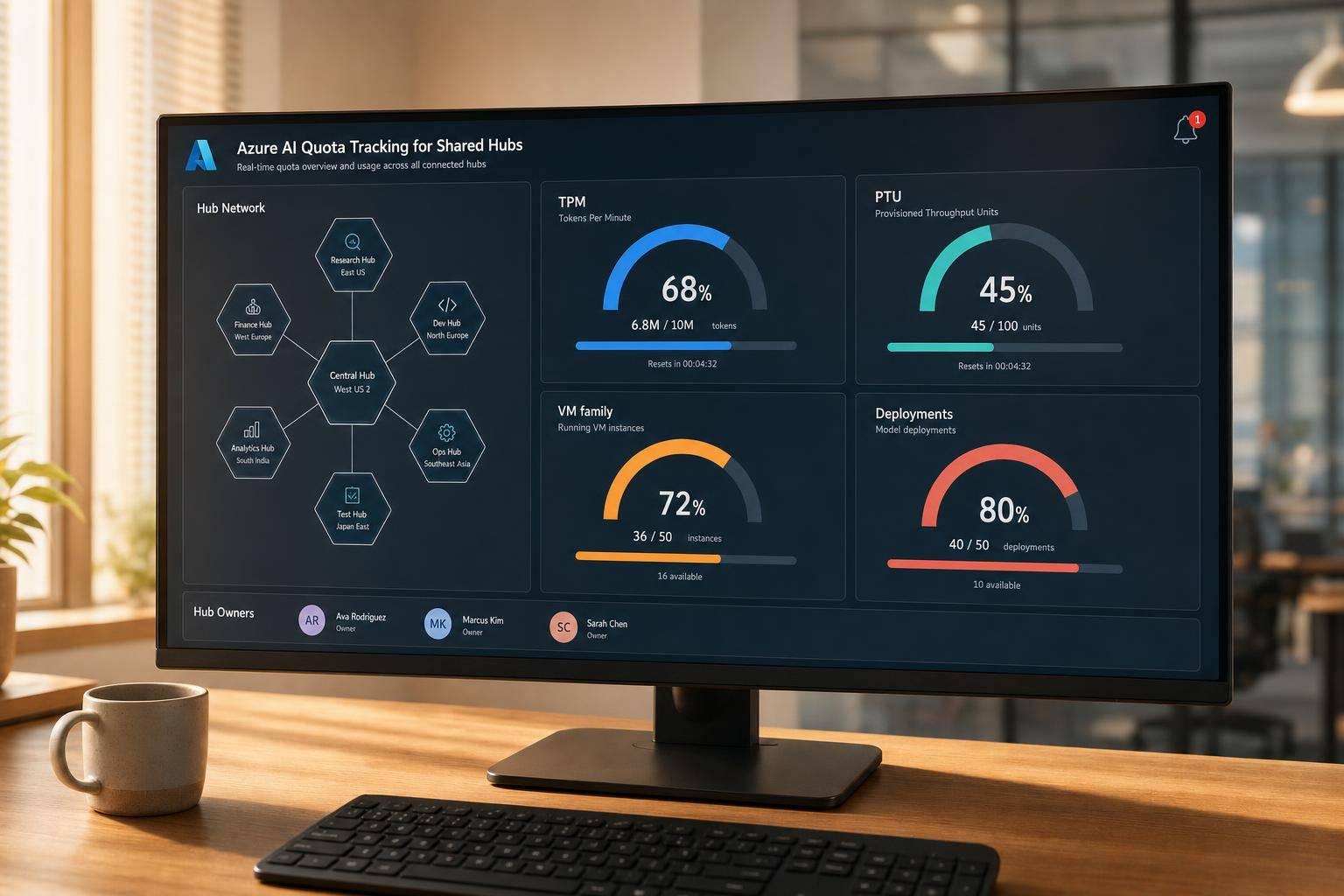
Track TPM, PTU, VM family and deployment quotas in shared Azure AI hubs using Foundry, Monitor, and Log Analytics; set alerts and owners.

Assume Azure webhooks will duplicate. Use an atomic durable idempotency key, persist claims, and separate replay flows.
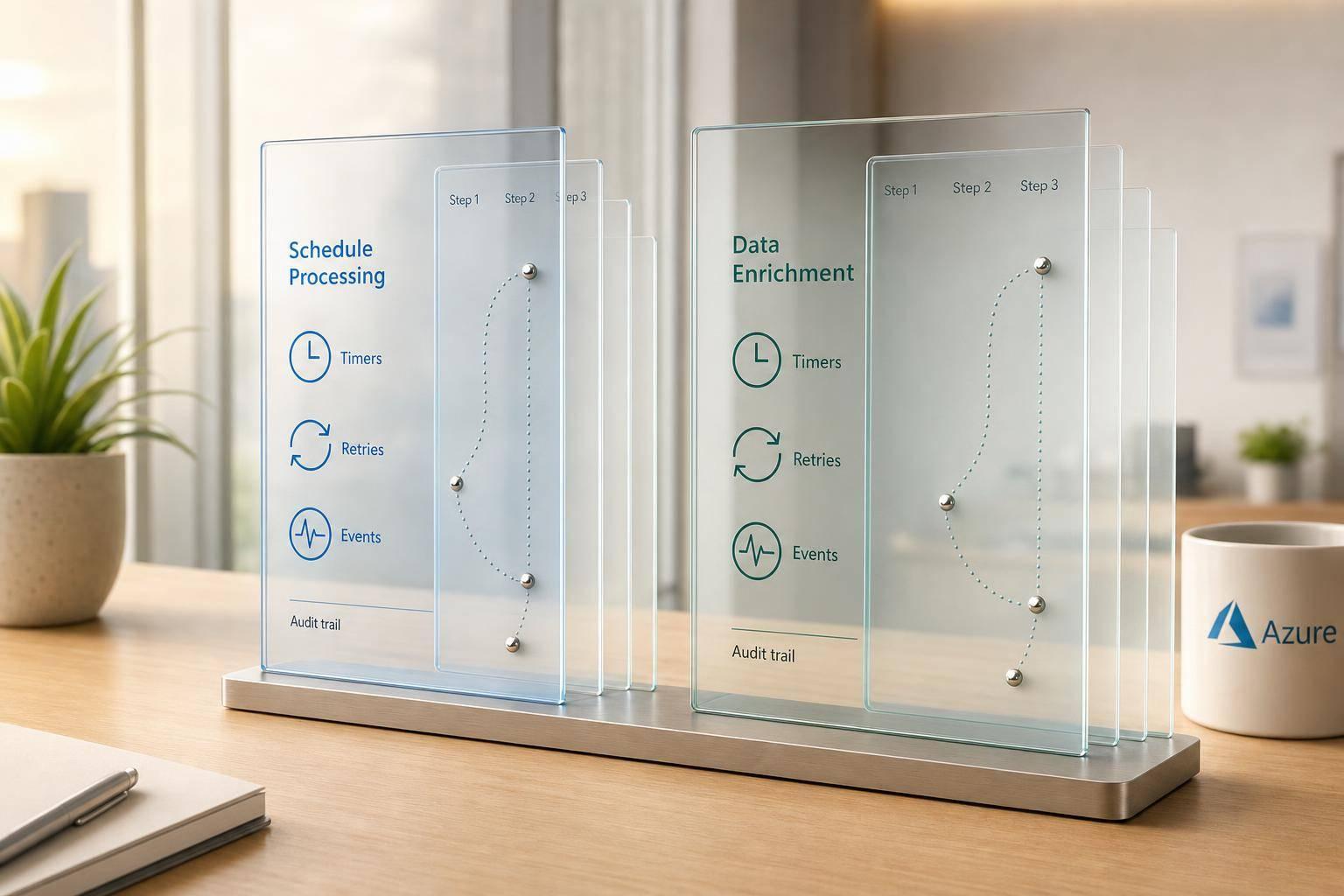
Compare Durable Functions vs Logic Apps Standard for reliable, long-running Azure workflows using timers, retries, events, and audit trails.

Route only meaningful ERP events to Azure AI agents with idempotency, RBAC, approval gates, and traceable ERP write-backs.
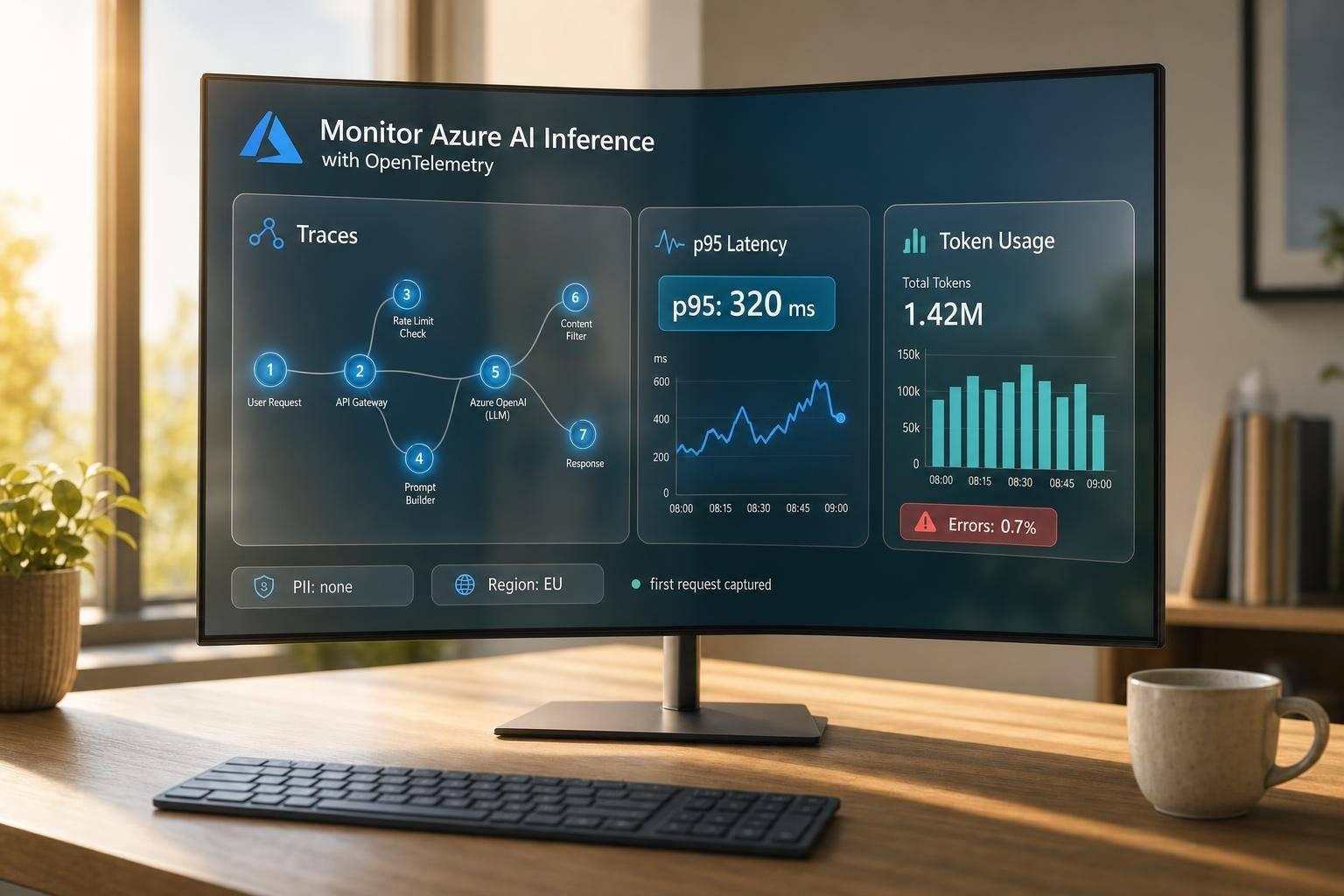
Use OpenTelemetry and Application Insights to monitor Azure AI inference—track traces, p95 latency, token usage, errors, and audit tags from the first request.

Verify raw webhook bytes with HMAC, enforce timestamp and replay checks, store secrets in Key Vault, and log failures in App Insights.

Guide to building production-ready activity-duration forecasts on Azure: data pipelines, time-aware training, batch scoring, Power BI, and governance.

Use AI to sort, summarize, and flag airworthiness evidence—but require human approval, model governance, and full audit logs.