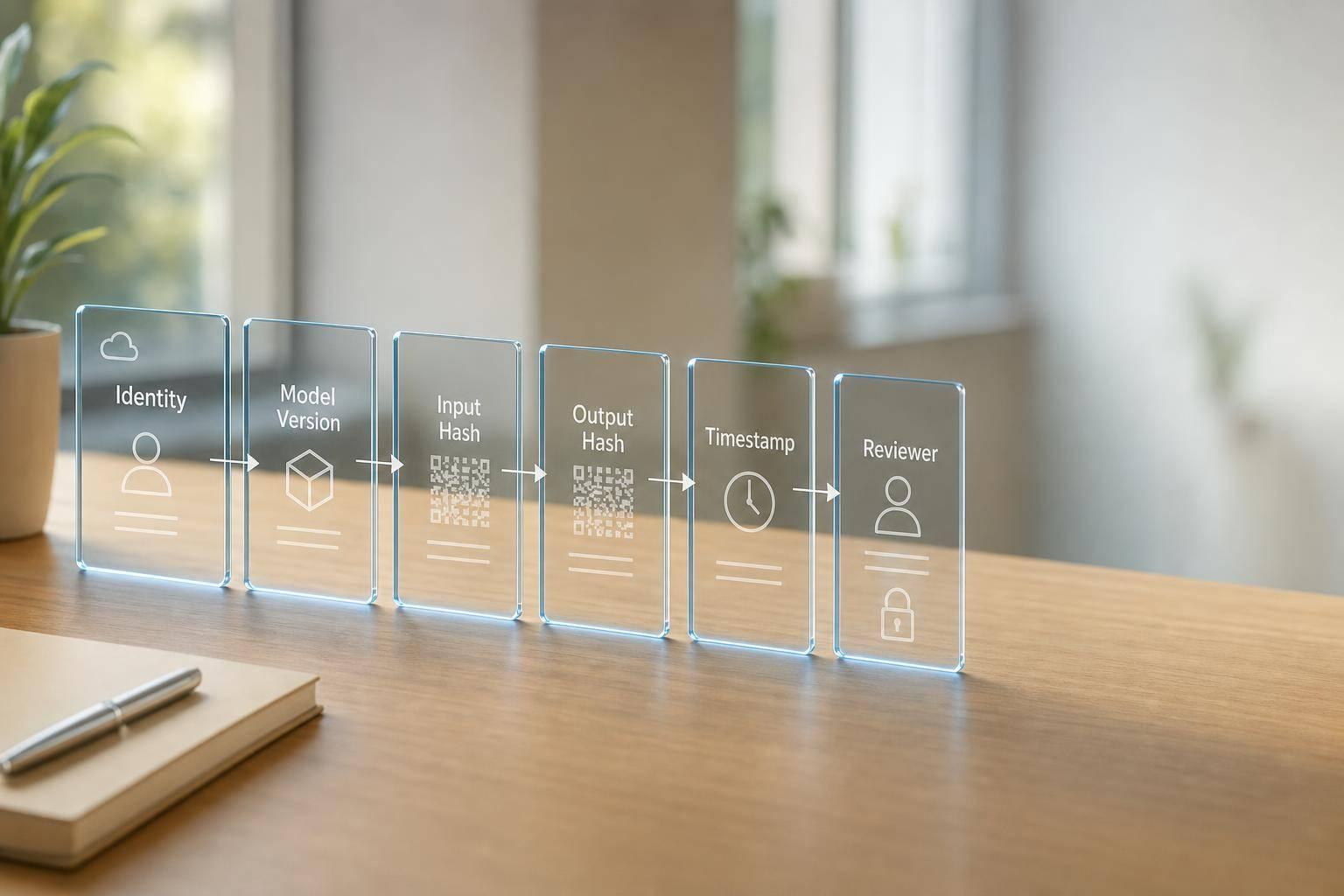
GxP Audit Trails for AI Workflows on Azure
Build Part 11/Annex 11‑compliant AI audit trails on Azure: log identity, model version, input/output hashes, immutable storage, retention and review.
Tag
Articles tagged “Workflow Automation” on Ryshe.
Build Part 11/Annex 11‑compliant AI audit trails on Azure: log identity, model version, input/output hashes, immutable storage, retention and review.

Seven Azure Logic Apps callback patterns to match partner capabilities, latency, and recovery—pick the simplest model that fits.

Compare BLEU, COMET, BLEURT, BERTScore and discourse-aware metrics to evaluate long technical translations and spot cross-sentence errors.

Implement Azure predictive maintenance: start small, fix data quality, route alerts into ERP/MES, and measure downtime and scrap reductions.

Status-based triggers and structured fields turn return visits from costly guesswork into automated, trackable follow-up workflows.

Assume Azure webhooks will duplicate. Use an atomic durable idempotency key, persist claims, and separate replay flows.
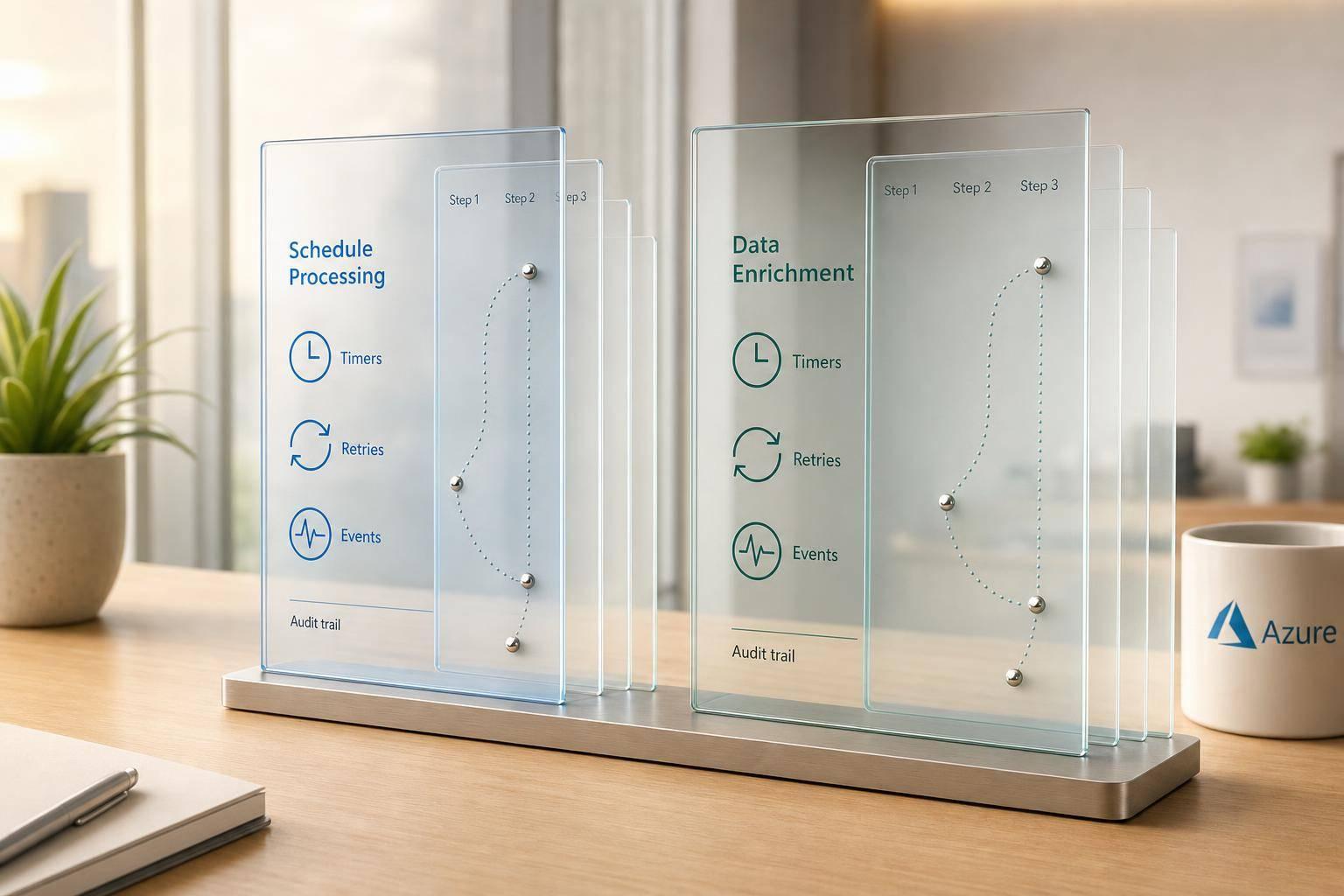
Compare Durable Functions vs Logic Apps Standard for reliable, long-running Azure workflows using timers, retries, events, and audit trails.

Route only meaningful ERP events to Azure AI agents with idempotency, RBAC, approval gates, and traceable ERP write-backs.

Verify raw webhook bytes with HMAC, enforce timestamp and replay checks, store secrets in Key Vault, and log failures in App Insights.

Build a lean PO approval flow: trigger only pending approvals, extract key PO data, route by policy, write back to ERP, and audit runs.

Use AI to sort, summarize, and flag airworthiness evidence—but require human approval, model governance, and full audit logs.

Define pass/fail rules, run test sets, inspect traces and verify end states to ensure AI copilot tasks truly complete.